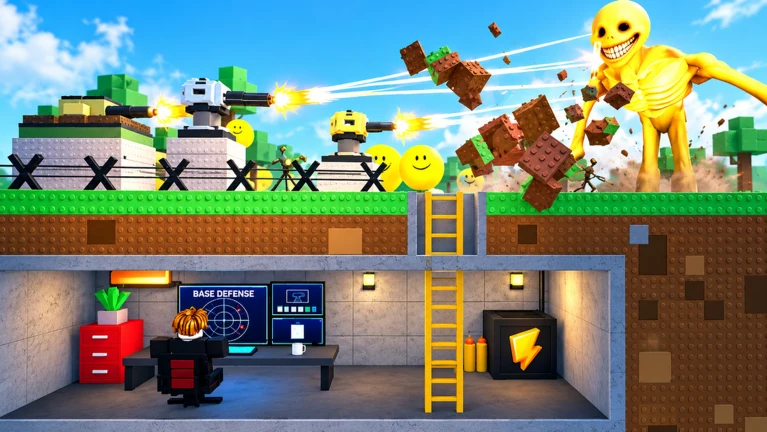
- Verity waves are the core threat in Bunker vs Verity: build, reinforce, and defend before nightfall
- Turret placement matters more than turret count; overlapping fire lanes beat scattered defenses
- Coin reserves win late waves; never spend your full balance before an attack begins
- Repair under pressure; chasing Verities away from the bunker creates openings
- Co-op roles (builder, gunner, scout) prevent duplicate spending and unattended breaches
What Is the Verity Threat in Bunker vs Verity?
Bunker vs Verity is a defensive survival experience on Roblox developed by Beyondd Games. You build a bunker, place defenses, earn coins, and prepare for increasingly demanding waves of Verities that attack your structure at night. The game supports small servers of up to six players, making coordination and preparation the deciding factor between a stable defense and a breached base.
The core loop is simple but punishing: construct, earn, prepare, defend, repair. Every wave grows stronger, and every coin you waste early becomes a wall section or turret you cannot afford later.
| Game Element | Details |
|---|---|
| Developer | Beyondd Games |
| Platform | Roblox |
| Genre | Survival / Defense / PvE |
| Server size | Up to 6 players |
| Core threat | Verity enemy waves |
| Main resources | Coins, walls, turrets |
Survival depends on maintaining the bunker while dealing with threats. Chasing enemies far away from your defensive zone creates openings that Verities will exploit.
Bunker Defense Fundamentals
A strong bunker protects the entrance, preserves clear firing lanes, provides a safe movement route, and includes a fallback position for repairs. The strongest design depends on team size, resources, and expected wave length.
Compact Solo Bunker
- Small central room, controlled entrance
- Short wall lines, defenses on main approach
- Best for solo and early survival
Cooperative Crossfire
- Central area with overlapping fire directions
- Two players cover separate approach lanes
- Requires clear role division
Long-Wave Reinforced
- Primary line plus protected interior route
- Secondary fallback behind first layer
- Costs more, built for extended waves
| Bunker Build | Best For | Key Priority | Main Weakness |
|---|---|---|---|
| Compact Solo | Solo / early game | Entrance coverage, durability | Blocked firing angles are costly |
| Crossfire Co-op | 2+ players | Overlapping lanes, role split | Crowding reduces visibility |
| Reinforced Long-Wave | Late waves | Repairs reserve, fallback line | Expensive, unfinished sections exposed early |
| Hidden-Defense | Protected turrets | Cover without blocking arcs | Overused cover creates blind spots |
Avoid building so tightly that walls, objects, or teammates block your own turret firing paths. A blocked turret is worse than no turret.
Turret Roles and Placement Strategy
Turret value changes with the threat pattern and stage of a run. Early defenses should provide dependable coverage at reasonable cost, while later setups benefit from specialized damage, crowd control, and overlapping fields of fire.
| Tier | Role | Strengths | Best Use |
|---|---|---|---|
| S | Balanced Core Defense | Reliable damage, good range, strong value | Primary defense before specializing |
| A | Single-Target Damage | Kills durable threats, scales with support | Late waves with one dangerous Verity |
| A | Crowd-Control | Manages groups, buys repair time | Waves arriving together, chokepoints |
| B | Fast-Attack Early | Quick response, cheap initial coverage | Opening phase only |
| C | Narrow-Specialty | Situational lane-specific value | Secondary lanes, specific builds |
Adding more turrets when existing ones are blocked or poorly placed wastes coins. Fix angles and coverage first, then expand.
Step-by-Step: Surviving Your First Night
Follow this sequence to establish a functional defense before the first Verity attack.
Choose a defensible location
Pick a position with clear sightlines and room for repairs and later expansion. Avoid cramped spots that block firing paths.
Build the bunker structure
Place main walls and entrance first, then a compact interior. Skip decorative construction during the opening phase.
Place the first defenses
Position defenses to cover the approach and the most likely attack lane. Prioritize overlapping coverage over isolated placements.
Earn and preserve coins
Keep a reserve for repairs, walls, and emergency defenses. A reserve is often more valuable than a small early upgrade.
Prepare for the night
Check firing angles, clear movement paths, and get the team inside the defensive area before the attack begins.
Respond to Verities
Watch the approach, repair damaged sections, and shift attention to the weakest side instead of abandoning the defense.
A final inspection before nightfall often reveals blocked turrets, exposed entrances, and missing wall sections—the three most common causes of early wipeouts.
Wave Phases and Co-op Strategy
Wave pressure escalates through three phases. Match your spending and positioning to each stage instead of applying one plan to every wave.
| Phase | Wall Priority | Turret Priority | Coin Rule |
|---|---|---|---|
| Early waves | Close exposed entrances first | One turret on main approach | Keep reserve after first builds |
| Middle waves | Upgrade frequently attacked sections | Add coverage only when lanes slip | Save for repair + one upgrade |
| Late waves | Reinforce weakest sections | Upgrade effective positions | Enter hard waves with a reserve |
| Between waves | Inspect damage, find next breach point | Check firing angles and gaps | Split coins: repairs vs next upgrade |
For co-op teams, divide responsibilities rather than building the same defenses independently:
| Team Size | Recommended Roles | Key Tip |
|---|---|---|
| 2 players | Builder + Defender | Communicate before spending coins |
| 3 players | Builder, Gunner, Scout | Scout calls threats before walls fail |
| 4+ players | Dedicated defense team + coordinator | Assign one flexible emergency player |
| Any size | Wave Coordinator | Plan during prep, not during attacks |
Coordinate purchases so teammates do not independently buy the same defense type. Duplicate construction is one of the most common co-op resource wastes.
Essential Defense Milestones:
- Establish a closed bunker with one covered entrance
- Place at least one turret with a clear firing lane
- Keep a coin reserve before every nightfall
- Repair all damaged sections between waves
- Assign clear roles before the first late wave
FAQ
Q: What is the Verity in Bunker vs Verity?
Verities are the enemy waves that attack your bunker at night. They grow stronger as the match progresses, forcing you to reinforce walls, upgrade turrets, and manage coins across early, middle, and late phases.
Q: Should I spend all my coins before the first night?
No. Keeping a reserve is usually more valuable than a small early upgrade. Late waves demand emergency repairs, and entering a difficult wave with an empty wallet is a common cause of failure.
Q: What is the best bunker layout for solo play?
A compact central room with a controlled entrance, short wall lines, and defenses covering the primary approach. Spend on entrance coverage and structural durability before adding secondary rooms.
Q: How do co-op teams avoid wasting resources?
Divide roles—builder, gunner, scout, and a resource coordinator for larger teams. Announce major purchases, keep one flexible player for emergencies, and plan during preparation windows rather than mid-attack.
This is an independent fan-made guide website and is not affiliated with Beyondd Games or Roblox. For official details, visit the Roblox platform.