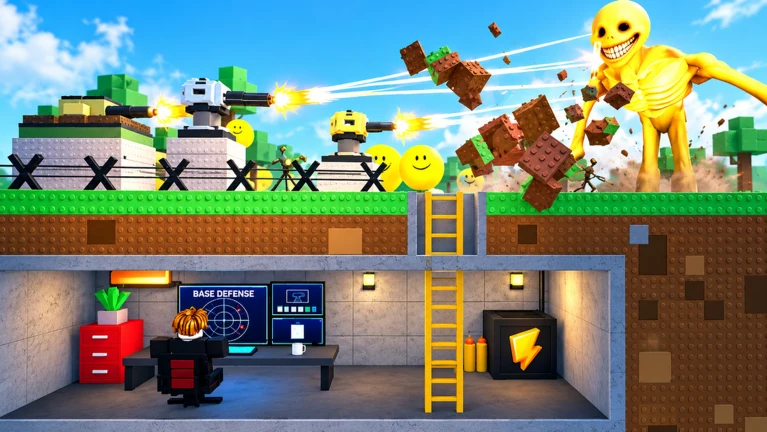
- Bunker vs Verity is a Roblox survival defense game by Beyondd Games where players build bunkers against Verity waves.
- Core loop: build walls, place turrets, earn coins, and repair between increasingly strong waves.
- Top strategy: reserve coins for emergency repairs instead of spending your full balance each round.
- Best setup: overlapping turret coverage on the main approach beats scattered single placements.
- Co-op tip: assign clear roles (builder, gunner, scout) to avoid duplicate purchases and unattended breaches.
What Is Bunker vs Verity?
Bunker vs Verity is a defensive survival experience on Roblox developed by Beyondd Games, first appearing on the platform on September 22, 2026. Matches center on protecting a bunker from escalating waves of enemies called Verities, while managing coins, construction, and repairs across a run. Each server holds up to six players, making coordination a major factor in how long a defense holds.
Since launch, the game has grown quickly. Public tracking pages reported roughly 1.1M+ total visits and around 9,500 concurrent players as of early October 2026, with the most recent recorded update landing on October 7, 2026. Player counts shift constantly, so treat those figures as a snapshot rather than a permanent stat.
| Detail | Value |
|---|---|
| Developer | Beyondd Games |
| Platform | Roblox |
| Genre | Survival / Defense / PvE |
| Server size | 6 players |
| Created | September 22, 2026 |
| Total visits (Oct 2026) | ~1.1M+ |
| Peak CCU (Oct 2026) | ~9,500 |
Access the game through the official Roblox listing or search "Bunker vs Verity" on the Roblox discovery page. Roblox (roblox.com) is the only official platform for the experience.
Beginner Setup: Your First Night
A successful opening focuses on survival fundamentals rather than spending everything immediately. Establish a compact defensive position, keep a safe route through the bunker, invest in dependable defenses, and hold enough resources to repair after the first attack.
Choose a defensible location
Pick a spot with clear sightlines for your defenses and room for movement, repairs, and later expansion. Avoid building so tightly that walls or teammates block firing paths.
Build the bunker structure
Place the main walls and entrance first, then create a compact interior you can reinforce without burning early resources. Keep the entrance easy to monitor.
Place the first defenses
Position your first turret where it covers the approach to the entrance and the most likely attack lane. Overlapping coverage beats isolated placements.
Earn and preserve coins
Use safe windows to earn coins while keeping enough funds for repairs, extra walls, and emergency defenses before nightfall.
Prepare for the night
Finish essential structure, check firing angles, clear movement paths, and get the team inside the defensive zone before the wave begins.
Respond to Verities
Watch the approach, repair damaged sections, and shift attention to the weakest side instead of chasing enemies away from the bunker.
Do not spend your entire coin balance before the first night. A repair reserve is usually more valuable than one small early upgrade, because a single breached wall can end a run.
Best Bunker Builds Compared
The strongest bunker design depends on team size, available resources, and expected wave length. Every layout should protect the entrance, preserve clear firing lanes, provide safe movement, and include a fallback position.
Compact Solo Bunker
- Best for: solo players, early survival
- Small central room with a controlled entrance and short wall lines
- Spend on entrance coverage and durability before secondary rooms
- Weakness: blocked firing angles are especially costly in tight space
Cooperative Crossfire Bunker
- Best for: two or more players
- Central defensive area with two overlapping firing directions
- Split repair, building, and monitoring responsibilities
- Weakness: crowded interiors reduce visibility if expanded without a plan
Long-Wave Reinforced Bunker
- Best for: extended survival, later waves
- Primary defense line plus a protected interior route and fallback position
- Reserve resources for repairs on repeatedly attacked sections
- Weakness: large footprint is expensive and vulnerable while unfinished
Hidden-Defense Layout
- Best for: protecting valuable turrets
- Defenses placed behind strong structure with clear openings
- Protect key equipment without blocking firing arcs
- Weakness: too much cover creates blind spots and cuts effective range
Before placing any turret, trace the enemy approach with your eyes. If a defense cannot cover the lane enemies actually use, it is decorative, not defensive.
Wave Survival by Phase
Enemy waves grow harder as the match progresses, so defense depends on spending resources before a crisis begins rather than reacting during one.
| Phase | Wall Priority | Turret Priority | Coin Rule |
|---|---|---|---|
| Early waves | Close the most exposed entrances first, skip expensive upgrades | One turret covering the main approach | Keep a reserve after first construction |
| Middle waves | Upgrade frequently attacked sections, especially enemy focus points | Add coverage only when a lane is slipping | Save for emergency repair plus one upgrade |
| Late waves | Reinforce weakest sections; structural survival first | Upgrade effective positions, maintain overlap | Enter hard waves with a reserve, not mid-wave income |
| Between waves | Inspect damage, find next likely breach point | Check firing angles and coverage gaps | Split coins between repairs and next upgrade |
Never commit your full reserve before a difficult wave starts. Income earned during an attack is unreliable, and running out of coins mid-repair is one of the most common run-ending mistakes.
Coin Management and Turret Value
Coins are most valuable when converted into reliable survival power rather than cosmetic or low-impact purchases. Turret value also shifts with the threat pattern and stage of the run.
| Stage | Upgrade Priority | Common Waste |
|---|---|---|
| Opening phase | Essential construction first, then your best defensive position | Building multiple low-impact spots before confirming which lane matters |
| Development phase | Improve the wall or turret directly limiting survival | Adding turrets when existing ones are blocked or misplaced |
| Late phase | Sustained damage, structural durability, coverage of the worst lane | Cosmetic upgrades while the core defense is vulnerable |
| Team play | Shared spending plan: stabilize, maintain damage, then expand | Duplicated construction from poor communication |
Turret roles fall into recognizable tiers by function: a balanced core defense offers dependable all-round value, single-target damage handles durable threats on later waves, crowd-control defenses manage grouped approaches near chokepoints, and fast early defenses establish coverage on a budget before specialized setups become affordable.
Run Goals Checklist:
- Close every exposed entrance before the first night
- Establish one turret with clean entrance coverage
- Keep an emergency repair reserve at all times
- Upgrade the weakest attacked section between waves
- Confirm overlapping coverage on the main approach
If you finish a wave with full walls, untouched reserves, and no coverage gaps, you are ready to invest in expansion. If any of those three are missing, fix that first.
Co-op Roles and FAQ
Coordinated roles reduce duplicate purchases, prevent unattended breaches, and speed up preparation between waves. For two players, split into builder and defender. With three, add a scout who reports weak points early. In four or more, dedicate a resource coordinator to announce major purchases and prevent doubled spending, and use short, specific callouts naming the lane, the repair needed, and urgency.
Q: What is Bunker vs Verity?
Bunker vs Verity is a Roblox survival defense game by Beyondd Games. Players build and reinforce a bunker, place defensive turrets, manage coins, and survive increasingly strong waves of Verities, alone or with up to six players per server.
Q: Should I spend all my coins before the first night?
No. Keeping a repair reserve is usually more valuable than a small early upgrade. A single breached wall can end a run, and coins earned during an attack are not guaranteed.
Q: Which bunker build is best for solo play?
A Compact Solo Bunker works best: a small central room with a controlled entrance, short wall lines, and defenses concentrated on the main approach. Expand only after entrance coverage and durability are solid.
Q: How do co-op teams avoid wasting coins?
Assign clear roles covering construction, turret operation, resource planning, and frontline response, and designate one player to announce major purchases so teammates do not buy the same defenses independently.
This is an independent fan-made guide website and is not affiliated with Beyondd Games or Roblox. Game stats are snapshots from public tracking pages as of October 2026.