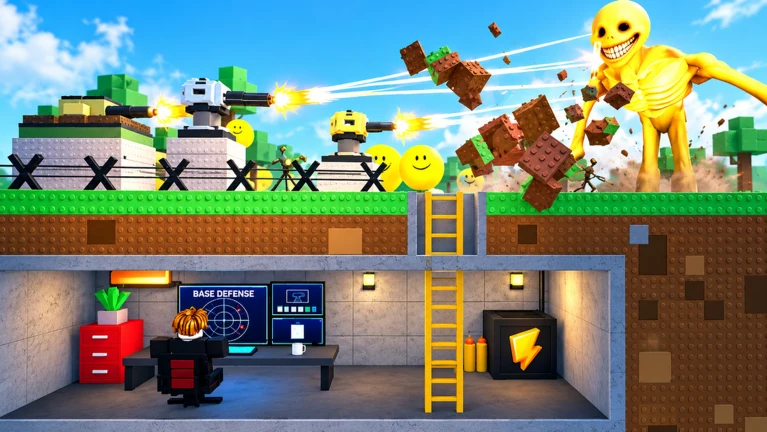
- Bunker vs Verity pits survivors against waves of Verities, and players can end up on the monster side through the Become Verity mechanic.
- Infection risk: losing your bunker or getting caught during a wave is what typically triggers the switch.
- Survivor counterplay: repair walls, maintain turret coverage, and never chase enemies away from your defensive zone.
- Verity-side play: pressure the weakest wall section and force defenders to split their attention.
- Core rule: whichever side you are on, waves keep escalating, so plan resources before pressure peaks.
What Does Become Verity Mean in Bunker vs Verity?
In Bunker vs Verity, the core loop is a defensive survival experience built around a bunker, coins, turrets, and increasingly demanding enemy waves of Verities. The "Become Verity" concept refers to the moment a player stops defending and joins the attacking side. Because the game is built as a Survival / Escape / PvE experience by Beyondd Games, understanding when and how a survivor turns into a Verity — and what you can still do afterward — is one of the most important mechanics to master.
The transition usually follows a defensive failure rather than a random event. When your bunker collapses, your firing positions are overrun, or you are caught outside the defensive zone during a night wave, the match no longer treats you as a defender. That failure state is what players commonly describe as "becoming Verity."
Key triggers to watch for:
- Structural collapse — the weakest wall section fails and the interior is exposed
- Blocked firing angles — turrets or players cannot cover the approach lane anymore
- Resource exhaustion — no coin reserve left for emergency repairs when the wave peaks
- Overextension — chasing enemies away from the bunker and creating an opening behind you
Survival depends on maintaining the bunker while dealing with threats. Chasing enemies far from the defensive zone creates openings that can turn a winning run into an instant loss — and flip you to the attacking side.
| Trigger | Warning Sign | Early Response |
|---|---|---|
| Wall breach | Repeated damage to one section | Reinforce that section before next wave |
| Turret gap | Enemies slipping through one lane | Add overlapping coverage on that lane |
| Coin shortage | Balance near zero between waves | Skip optional upgrades, save for repairs |
| Exposure | Team outside during nightfall | Recall everyone to the defensive area |
How to Avoid Becoming a Verity: Defense Priorities
Prevention is always cheaper than recovery. A stable defense in Bunker vs Verity follows a clear priority order, and most players who turn into Verities skipped one of these steps during the preparation window between waves.
Priority order for a stable bunker:
- Close the structure first — finish essential walls and the entrance before any cosmetic or optional construction
- Cover the main approach — one reliable turret on the primary lane beats several scattered placements
- Keep a coin reserve — never spend the full balance before nightfall
- Inspect between waves — check blocked turrets, firing angles, and missing wall sections every preparation window
| Phase | Wall Priority | Turret Priority | Coin Rule |
|---|---|---|---|
| Early waves | Close exposed entrances | One turret on main approach | Reserve after first purchases |
| Middle waves | Upgrade most-attacked sections | Add coverage only for slipping lanes | Save for repair + one upgrade |
| Late waves | Reinforce weakest sections | Maintain overlapping fire | Enter hard waves with a reserve |
| Between waves | Inspect and identify breach point | Check coverage gaps | Split between repairs and next upgrade |
Overlapping coverage matters more than turret count. A lane that is consistently slipping through is the signal to add a defense — not a reason to place turrets without a clear target lane.
Playing After You Become Verity: Attacker Strategy
If the switch happens, your goal inverts: instead of holding a position, you pressure one. Attacker-side play in Bunker vs Verity rewards patience and focus rather than reckless charges into turret fire.
Identify the weakest section
Watch the bunker between engagements. The most frequently damaged wall or the lane with the thinnest turret coverage is your primary target.
Concentrate pressure
Commit attacks to a single section instead of spreading across the perimeter. Concentrated damage forces defenders to spend their coin reserve on repairs.
Force split attention
Move between two approach lanes so defenders cannot stack everyone on one firing position. Their turrets and players cannot cover every angle at once.
Exploit repair windows
Attack again immediately after a repair — the defender's coin reserve shrinks with every cycle, and late waves punish empty wallets.
Escalate with the waves
Later waves bring more pressure. Time your pushes to the wave peaks when the defense is already stretched thin.
The attacker wins the resource war, not the first engagement. Every wall section you damage drains coins that the defense wanted to spend on upgrades.
Co-op Roles That Prevent the Switch
Coordinated teams rarely lose players to the Verity side. Role division prevents duplicate construction, unattended breaches, and wasted coins — the three most common causes of a collapse.
Builder
- Owns walls, repairs, and upgrades
- Prioritizes structural survival
- Reinforces the section the scout calls out
Gunner
- Controls the strongest firing position
- Focuses sustained damage on the active lane
- Avoids leaving the turret unattended during waves
Scout / Coordinator
- Watches exposed approaches
- Reports weak points early
- Tracks the coin reserve and delays optional purchases
| Team Size | Recommended Setup | Key Coordination Rule |
|---|---|---|
| 2 players | Builder + Defender | Communicate before any coin purchase |
| 3 players | Builder, Gunner, Scout | Scout calls threats before walls fail |
| 4+ players | Dedicated roles + flexible responder | Use short callouts: lane, repair, urgency |
Make the plan during the preparation window, not while enemies are already attacking. A five-second role check between waves prevents most Becoming-Verity situations entirely.
Pre-Wave Survival Checklist:
- All essential wall sections repaired or reinforced
- Turret firing angles clear and unblocked
- Coin reserve kept for emergency repairs
- Team inside or near the defensive area before nightfall
- Weakest lane identified and assigned a defender
FAQ
Q: What is Become Verity in Bunker vs Verity?
It describes the moment a survivor stops defending and effectively joins the attacking Verity side, usually after their bunker collapses or they are caught outside the defensive zone during a wave. The game itself is a defensive survival experience where Verities attack in escalating waves.
Q: Can I avoid becoming a Verity?
Yes. Keep essential walls closed, maintain overlapping turret coverage on the main approach, hold a coin reserve for repairs, and get everyone inside the defensive area before each night wave. Most transitions happen after one of these steps is skipped.
Q: What should I do after turning into a Verity?
Focus pressure on the weakest wall section instead of spreading attacks across the perimeter. Force defenders to spend coins on repairs, exploit the windows right after each repair, and time major pushes to wave peaks.
Q: Does team size change the strategy?
Yes. Two-player teams split builder and defender duties, three-player teams add a scout who reports weak points early, and larger teams should assign dedicated turret operators plus one flexible responder for emergency reinforcement.
This is an independent fan-made guide website and is not affiliated with Beyondd Games or Roblox. For the current game state and official entry point, use the official Roblox listing.