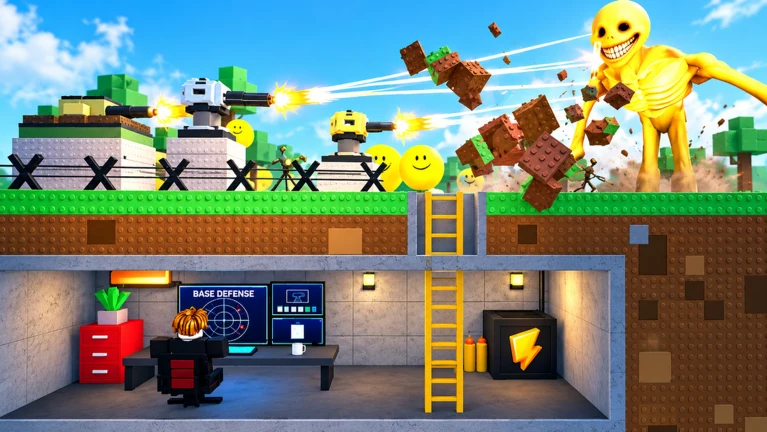
- Verity family bunker: A team-oriented bunker layout designed to survive escalating Verity waves in Bunker vs Verity.
- Core principle: Protect the entrance first, keep overlapping turret coverage, and always hold a repair reserve.
- Family roles: Assign builder, gunner, scout, and coordinator roles before the first night.
- Common failure: Spending the entire coin balance before nightfall leaves no funds for emergency repairs.
- Best late-game move: Reinforce the weakest wall sections before making any nonessential upgrades.
What Is a Verity Family Bunker?
A Verity family bunker is a cooperative base design in Bunker vs Verity, the Roblox survival experience from Beyondd Games where players build shelters, place defenses, and hold out against increasingly dangerous Verity waves. Instead of a solo micro-bunker, a family bunker is built for a small team — up to 6 players per server — with divided responsibilities and layered defense lines.
The design goal is simple: one controlled entrance, overlapping firing lanes, a protected interior route, and a fallback position so the team can repair and reposition under pressure rather than abandoning the base when a wall fails.
Controlled Entrance
- Single monitored entry point
- Clear sightlines for turrets
- Easy to repair under fire
Layered Defense
- Primary line plus fallback
- Overlapping turret arcs
- No isolated defenses
Interior Route
- Safe movement for repairs
- No dead-end rooms
- Space for later expansion
Never block your own firing lanes. Walls, decorations, and teammates standing in front of turrets are among the most common reasons a well-funded bunker still falls.
Best Family Bunker Layouts
The strongest layout depends on team size, resources, and how deep into the waves you plan to survive. Compare the four proven structures below before committing your coins.
| Layout | Best For | Key Features | Main Weakness |
|---|---|---|---|
| Compact Solo Bunker | Solo / early survival | Small central room, short walls, one strong entrance coverage | Blocked angles are very costly |
| Cooperative Crossfire | 2+ players | Two overlapping firing directions on separate approach lanes | Crowded interior reduces visibility |
| Long-Wave Reinforced | Extended waves | Primary line, protected interior, secondary fallback behind first layer | Expensive; unfinished sections are vulnerable early |
| Hidden-Defense | Protecting valuable turrets | Defenses behind strong structure with clear openings | Over-cover creates blind spots |
Upgrade priority by layout:
| Layout | First Purchase | Second Purchase | Reserve For |
|---|---|---|---|
| Compact Solo | Entrance coverage | Wall durability | Replacement turret |
| Cooperative Crossfire | Second firing lane | Shared repair stock | Lane reinforcement |
| Long-Wave Reinforced | Primary defense line | Fallback position | Emergency repairs |
| Hidden-Defense | Structural sections | Protected turret slots | Range-extending upgrades |
Do not expand the bunker footprint during the opening phase. A larger unfinished base is far easier to breach than a small completed one.
Building the Bunker: Step-by-Step
Follow this sequence when starting a fresh run. The order matters — a functional defense before nightfall is worth more than a large unfinished structure.
Choose a Defensible Location
Pick a position with clear sightlines toward the most likely approach, room for movement and repairs, and space for future expansion. Avoid tight spots where walls or teammates block firing paths.
Build the Core Structure
Place the main walls and entrance first, then a compact interior that can be reinforced later without rebuilding. Skip decorative construction entirely during the opening.
Place First Defenses
Position your initial turret where it covers the entrance approach and the largest shared firing lane. Overlapping coverage beats isolated placements.
Earn and Preserve Coins
Use safe windows between waves to earn coins, but keep a reserve for repairs, extra walls, and emergency defenses. Do not empty your wallet before nightfall.
Prepare for the Night
Run a final inspection: check firing angles, clear movement paths, confirm walls are complete, and get the team inside or near the defensive zone before Verities arrive.
Respond to Attacks
Watch the approach, repair damaged sections, and shift attention to the weakest side of the bunker. Do not chase enemies away from the defensive zone — it creates openings.
A 30-second pre-night inspection routinely reveals blocked turrets, exposed entrances, and missing wall sections — the three most common causes of first-night failures.
Wave Survival Priorities
Wave pressure in Bunker vs Verity rises steadily, so resources must be spent before a crisis begins, not during it. This table breaks down what to prioritize at each stage.
| Phase | Wall Priority | Turret Priority | Coin Rule | Under Pressure |
|---|---|---|---|---|
| Early waves | Close exposed entrances before upgrades | One turret on main approach | Keep a reserve after first builds | Kill enemies reaching the bunker, don't expand |
| Middle waves | Upgrade repeatedly attacked sections | Add coverage only when a lane slips | Save for repair + one upgrade + one turret | One player repairs while another fights |
| Late waves | Reinforce weakest sections first | Upgrade effective positions, keep overlap | Enter hard waves with a reserve | Repair immediately after damage spikes |
| Between waves | Inspect damage, find next breach point | Check angles and coverage gaps | Split coins between repairs and next upgrade | Assign roles before the next wave |
Never rely on income earned during an attack. Enter difficult waves with coins already banked — mid-wave earnings arrive too late to save a collapsing line.
Family Roles and Coin Management
Co-op teams fail most often from duplicate spending and unattended breaches. Divide roles explicitly, even in a two-player family group.
| Team Size | Recommended Roles | Key Responsibilities |
|---|---|---|
| 2 players | Builder + Defender | Builder constructs and repairs; defender holds the strongest firing position |
| 3 players | Builder + Gunner + Scout | Scout calls threats early so the builder reinforces the right section |
| 4+ players | Dedicated Defense Team | Assigned turret operators, one repair player, one flexible responder, one resource coordinator |
| Any size | Wave Coordinator | Confirms repairs done, positions staffed, and delays optional purchases when pressure rises |
Coin spending by stage:
| Stage | Smart Spending | Common Waste |
|---|---|---|
| Opening | Essential structure, then best defensive position | Multiple low-impact positions before knowing the threat lane |
| Development | Fix the limiting wall or turret first | Adding turrets when existing ones are blocked |
| Late game | Sustained damage and durability upgrades | Cosmetic purchases while the core is vulnerable |
| Team play | Shared spending plan, announced purchases | Duplicated construction from poor communication |
Use short, specific callouts: affected lane, required repair, urgency level. Vague warnings like "they're coming" waste the preparation window.
Pre-Night Checklist
Before Every Wave:
- All wall sections complete with no exposed entrances
- Turret firing angles clear of walls and teammates
- Coin reserve held for emergency repairs
- Team roles confirmed and positions assigned
- Interior movement paths clear for fast repairs
Bunker vs Verity is played through the official Roblox platform. Always use the official game listing to confirm current updates before starting a session.
FAQ
Q: What is the best Verity family bunker layout for beginners?
Start with the Cooperative Crossfire layout if playing with two or more people: a central defensive area with two overlapping firing directions. It is forgiving, affordable, and scales well as you add players and turrets.
Q: How many players can defend a bunker in Bunker vs Verity?
Servers hold up to 6 players. Teams of 4 or more benefit most from assigned roles: dedicated turret operators, a repair builder, a flexible responder, and a resource coordinator to prevent duplicate purchases.
Q: Should I spend all my coins on turrets before the first night?
No. Keep a reserve after your first construction purchases. A repair fund is usually more valuable than a small early upgrade, because one breached wall can end a run that extra coins would have saved.
Q: What causes most bunker defenses to fail?
The most common causes are blocked firing lanes, incomplete wall sections, and spending the full coin balance before nightfall. A short pre-wave inspection catches all three.