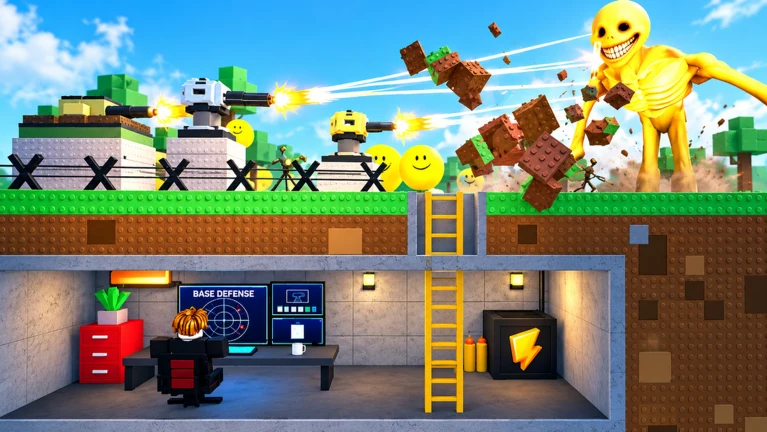
- Giant scary Verity: A large, high-pressure enemy type that tests your bunker walls and turret coverage late in runs.
- Threat pattern: Relies on concentrated damage against single wall sections, so reinforced entrances matter most.
- Best defense: Overlapping turret fire on the main approach lane plus a dedicated repair player.
- Key mistake: Chasing a giant Verity away from your defensive zone, which opens blind spots.
- Top tip: Enter high waves with a coin reserve for emergency repairs instead of spending everything early.
Understanding the Giant Scary Verity
The giant scary Verity is the kind of threat that defines a Bunker vs Verity run. While regular Verities test your coverage and reaction speed, giant variants push your structural planning to its limit. They hit harder, soak more turret damage, and punish bunkers with weak entrances or blocked firing lanes.
Most failed defenses against giant Verities come down to two causes: walls that were never upgraded after the early waves, and turrets placed so close together that one big target blocks multiple firing arcs at once.
| Threat Behavior | What It Means for You | Countermeasure |
|---|---|---|
| Concentrated melee pressure on one section | Single weak walls collapse fast | Upgrade the most-attacked wall first |
| High durability against small turrets | Fast-attack defenses fall off | Add single-target damage turrets |
| Approaches along the main lane | Predictable pathing | Stack overlapping fire on that lane |
| Creates panic and repositioning | Players abandon posts | Assign fixed repair and gunner roles |
Never leave your defensive zone to chase a giant Verity. The bunker's value comes from turrets, walls, and repair access — fighting in the open removes every one of those advantages and creates openings for the rest of the wave.
Bunker Builds That Survive Giant Verities
Not every layout holds up when a giant Verity starts hammering your entrance. These four builds each handle heavy pressure differently, so pick based on your team size and how far into a run you expect to survive.
Compact Solo Bunker
- Best for: Solo players, early-to-mid survival
- Small central room with one controlled entrance
- Short wall lines are cheap to repair fast
- Weakness: one blocked firing angle is very costly
Cooperative Crossfire Bunker
- Best for: Two or more players
- Two overlapping firing directions on one approach lane
- Splits repair and gunner duties naturally
- Weakness: crowded interiors reduce movement
Long-Wave Reinforced Bunker
- Best for: Late waves and giant Verity pressure
- Primary line, protected interior route, fallback position
- Reserve coins specifically for wall repairs
- Weakness: expensive footprint, slow to finish
Hidden-Defense Layout
- Best for: Protecting expensive turrets
- Defenses sit behind strong structural sections
- Keeps firing arcs open toward the approach
- Weakness: overcovering creates blind spots
Upgrade the wall sections that get attacked most often before making any nonessential improvements. A single reinforced entrance lane outperforms five half-upgraded walls when a giant Verity focuses its damage.
Turret Setup Against Giant Targets
Turret value shifts dramatically against giant Verities. Early fast-attack defenses that cleared small waves efficiently start to stall, and sustained single-target damage becomes the difference between a held lane and a breach.
| Turret Role | Tier vs Giants | Why | Best Placement |
|---|---|---|---|
| Single-target damage | ★★★★★ | Melts durable individual threats | Main approach lane, clear sightline |
| Balanced core defense | ★★★★ | Reliable damage over repeated waves | Primary entrance coverage |
| Crowd-control defense | ★★★ | Buys repair time when waves mix | Near chokepoints |
| Fast-attack early defense | ★★ | Struggles against high durability | Early game only, replace later |
| Narrow-specialty defense | ★★ | Situation-dependent | Only when the lane matches its arc |
Adding more turrets does not help when existing ones are blocked or poorly placed. Before buying anything new, check that every turret has a clear firing arc toward the lane the giant Verity actually uses.
Step-by-Step: Surviving a Giant Verity Assault
Spot the threat early
Watch the approach lanes during the preparation window. Identifying a giant Verity before it reaches your walls tells you which section needs reinforcement now, not after it breaks.
Reinforce the target wall
Direct your coin reserve into the wall section on the giant's path. Structural durability on one lane beats spreading thin upgrades across the whole bunker.
Focus your firepower
Concentrate turret coverage and your own position on the same lane. Overlapping fire from two angles kills a giant far faster than scattered shots from five positions.
Repair during the assault
In co-op, one player maintains walls while others hold firing positions. Solo players should repair in short bursts between the giant's attacks rather than mid-swing.
Hold the fallback line
If the outer wall fails, retreat to your secondary position instead of panicking in the open. A prepared fallback keeps the fight inside your turret coverage.
Use every preparation window to inspect damaged sections, confirm firing angles, and split coins between immediate repairs and the next planned upgrade. Teams that plan between waves consistently outlast those that scramble during them.
Pre-Assault Checklist and Team Roles
Before the Giant Verity Arrives:
- Upgrade the most frequently attacked wall section
- Confirm every turret has a clear firing arc
- Keep a coin reserve for emergency repairs
- Clear movement paths for quick repair access
- Assign repair and gunner roles in co-op
| Team Size | Recommended Roles | Key Coordination |
|---|---|---|
| Two players | Builder + Defender | Communicate before any coin purchase |
| Three players | Builder, Gunner, Scout | Scout calls threats before walls fail |
| Four or more | Dedicated defense team | Resource coordinator prevents duplicate spending |
Do not buy cosmetic or low-impact upgrades while your primary defense remains vulnerable. Late-wave rewards should be treated as reinforcement funds, not guaranteed spending money.
FAQ
Q: What is the giant scary Verity in Bunker vs Verity?
It is a large, high-durability enemy that concentrates attacks on single wall sections, typically appearing as wave pressure increases. It punishes bunkers with unupgraded entrances and blocked turret arcs.
Q: Which bunker build is best against giant Verities?
The Long-Wave Reinforced Bunker performs best for extended pressure because it includes a primary defense line, a protected interior route, and a fallback position, along with a coin reserve dedicated to repairs.
Q: Should I fight a giant Verity outside my bunker?
No. Leaving your defensive zone removes turret support, wall protection, and repair access. Hold your firing positions and let overlapping coverage do the work while designated players repair.
Q: Why do my turrets seem weak against giants?
Fast-attack defenses that excel early lose value against high-durability targets. Transition toward single-target damage turrets with clear sightlines on the main approach lane as waves get harder.