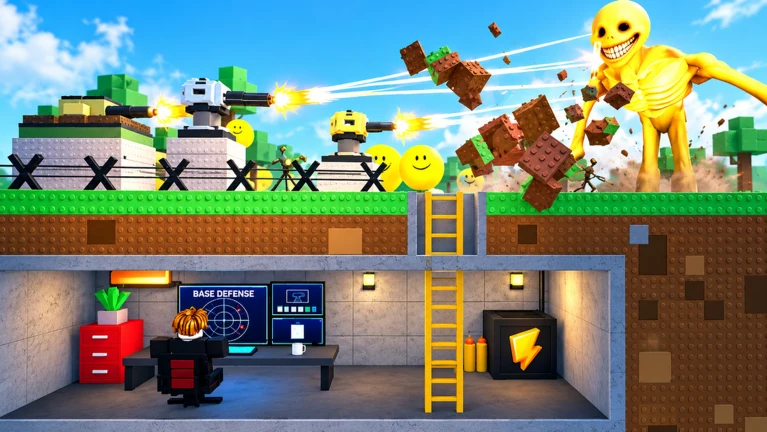
- Bunker vs Verity is a Roblox survival defense game where you protect a bunker from escalating Verity waves.
- Scary Verity pressure peaks at night, so finish your structure and defenses before the wave begins.
- Reserve coins for repairs and emergency walls instead of spending everything early.
- Overlapping turret coverage beats piling defenses into one isolated location.
- Co-op role division prevents duplicate purchases and unattended breaches.
What Makes the Scary Verity Waves Dangerous
Bunker vs Verity by Beyondd Games is a defensive survival experience where the tension builds each wave. The Verities grow tougher and more numerous, and any weakness in your bunker layout, wall placement, or firing lanes gets punished hard. Understanding the threat pattern is the first step toward surviving longer runs.
| Wave Phase | Verity Threat | Your Priority |
|---|---|---|
| Early waves | Small groups, low durability | Close entrances, establish core bunker |
| Middle waves | Concentrated attacks on weak walls | Upgrade frequently hit sections |
| Late waves | Durable threats, heavy pressure | Repair reserves, focus fire on dangers |
| Between waves | Brief calm | Inspect damage, assign roles |
Chasing Verities far away from your defensive zone creates openings. Stay near the bunker, repair damaged sections, and shift attention to the weakest side instead of abandoning your post.
Best Bunker Builds for Verity Defense
The strongest layout depends on team size, resources, and how long you expect the waves to last. Every design should protect the entrance, preserve clear firing lanes, and include a fallback position.
Compact Solo Bunker
- Best for: Solo players, early survival
- Small central room with a controlled entrance
- Short wall lines reduce cost
- Weakness: blocked firing angles are costly
Cooperative Crossfire Bunker
- Best for: Two or more players
- Two overlapping firing directions
- Teammates cover separate approach lanes
- Weakness: crowded interiors hurt movement
Long-Wave Reinforced Bunker
- Best for: Extended survival, later waves
- Primary line plus protected interior route
- Secondary fallback behind the first layer
- Weakness: large footprint costs more early
| Build | Entrance Control | Repair Access | Scalability |
|---|---|---|---|
| Compact Solo | Good | Excellent | Limited |
| Crossfire Co-op | Excellent | Good | Good |
| Long-Wave Reinforced | Excellent | Good | Excellent |
| Hidden-Defense Layout | Good | Fair | Situational |
Position defenses behind strong structural sections while keeping clear openings toward the approach route. Overusing cover creates blind spots and shortens effective range.
Turret Priorities and Wave Strategy
Turret value shifts as wave pressure grows. Early on, dependable low-cost coverage matters most; later waves reward specialized single-target damage, crowd control, and overlapping fields of fire.
| Tier | Defense Role | Best Use | Evaluation |
|---|---|---|---|
| S | Balanced Core Defense | Main entrance protection | Reliable damage, range, and cost efficiency |
| A | Single-Target Damage | Eliminating durable Verities fast | High potential, needs clear sightlines |
| A | Crowd-Control Defense | Groups at chokepoints | Strong wave control, lower direct damage |
| B | Fast-Attack Early Defense | Opening phase coverage | Good early value, needs support later |
| C | Narrow-Specialty Defense | Specific lane builds | Situational; poor placement wastes coins |
Place Initial Coverage
Put your first turret where it covers the main approach or the largest shared firing lane, not in an isolated corner.
Reinforce Before Crisis
Add coverage only when a lane is consistently slipping through or existing firepower cannot clear waves efficiently.
Upgrade Effective Positions
In late waves, upgrade firing positions that are already contributing instead of placing new turrets without a target lane.
Repair Under Pressure
Concentrate fire on the most dangerous targets, protect the bunker core, and repair immediately after damage spikes.
Use the calm window to check firing angles, coverage gaps, and whether each turret is actually dealing damage. Reassign responsibilities before the next wave begins.
Coin Management and Upgrade Order
Coins are most valuable when converted into reliable survival power. Build the minimum structure needed to control the battlefield, then improve defenses that are proving useful.
| Stage | Upgrade Priority | Resource Rule | Common Waste |
|---|---|---|---|
| Opening | Essential construction, then key defense | Do not spend the entire starting budget | Multiple low-impact positions early |
| Development | The wall or turret limiting survival | Keep a repair reserve | Adding turrets when old ones are blocked |
| Late | Sustained damage and durability | Save for emergency repairs | Cosmetic upgrades while vulnerable |
| Team Play | Shared spending plan | Assign resource tracking | Duplicate construction from poor comms |
A coin reserve is often more valuable than a small early upgrade. Enter difficult waves with savings rather than relying on income earned during the attack.
Co-op Roles and Survival Checklist
Coordinated teams outperform groups building independently. Cover construction, turret operation, resource planning, and frontline response, then adjust roles as the match evolves.
| Team Size | Recommended Roles | Key Tip |
|---|---|---|
| Two players | Builder and Defender | Communicate before spending coins |
| Three players | Builder, Gunner, Scout | Scout calls threats early so builder reinforces |
| Four or more | Dedicated Defense Team | Designate a resource coordinator |
| Any size | Wave Coordinator | Confirm repairs before each wave |
Pre-Wave Survival Checklist:
- Choose a defensible location with clear sightlines
- Close all exposed entrances with basic walls
- Place overlapping turret coverage on the main lane
- Keep a coin reserve for repairs and upgrades
- Assign repair and firing roles before nightfall
FAQ
Q: What is the scariest part of Bunker vs Verity waves?
The late waves bring durable Verities and heavy simultaneous pressure. Without a repair reserve and overlapping turret coverage, a single breached wall section can end the run.
Q: Should I build a big bunker early?
No. Start with a compact structure that closes exposed entrances and covers the main approach. Expand only after your first defense line is functional and you have coins to spare.
Q: How do I stop wasting coins in Bunker vs Verity?
Avoid duplicate construction, do not add turrets when existing ones are blocked or misplaced, and always keep a reserve for emergency repairs instead of optional upgrades.
Q: Is co-op better than solo survival?
Co-op is stronger when roles are divided clearly among building, turret operation, and resource planning. Solo play works with a compact bunker but leaves less margin for error during high-pressure waves.