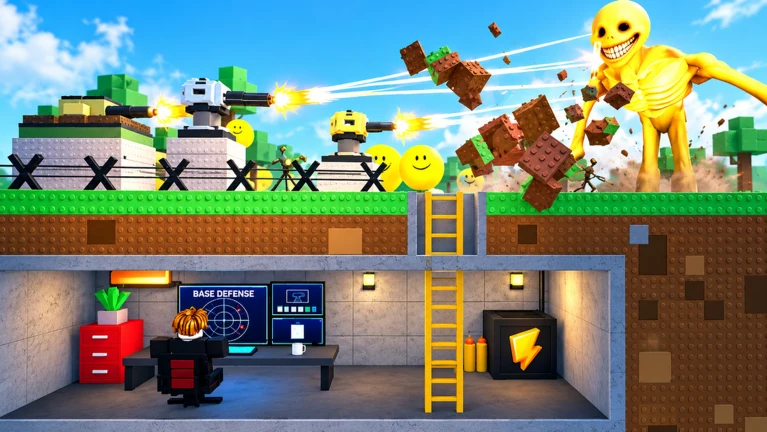
- Bunker vs Verity is a Roblox survival defense game where Verities attack in escalating night waves.
- Core loop: build a bunker, place turrets, earn coins, repair, and reinforce before each wave.
- Verity horror pressure: waves get stronger each night, so spend coins before a crisis, not during one.
- Best strategy: overlapping turret coverage and a coin reserve beat greedy early upgrades.
- Co-op tip: assign clear roles — builder, gunner, scout — to avoid duplicate spending.
What Is Bunker vs Verity? The Verity Horror Loop Explained
Bunker vs Verity is a defensive survival experience on Roblox, developed by Beyondd Games. You construct a bunker, fortify it with walls and turrets, and hold out against waves of monsters called Verities. The Verity horror tension comes from escalation: each wave brings more durable enemies, and the game is built around six-player servers where coordination often decides who survives the night.
| Game Detail | Information |
|---|---|
| Developer | Beyondd Games |
| Platform | Roblox |
| Genre | Survival / Escape / PvE defense |
| Players per server | 6 |
| Core threat | Verities attacking in escalating waves |
| Total visits (Oct 2026) | 1.1M+ |
| Peak concurrent players | 9.5K+ |
The game punishes players who spend everything early. Verity waves reward preparation — structure first, defenses second, upgrades third, reserve last.
Beginner Survival: Step-by-Step First Night
A successful opening focuses on survival fundamentals rather than spending everything immediately. Follow this sequence to build a bunker that survives the first Verity attacks.
Choose a defensible location
Pick a position with clear sightlines, room to move and repair, and space for later expansion. Avoid tight spots where walls or teammates block firing paths.
Build the bunker structure
Place main walls and the entrance first, then a compact interior that can be reinforced without wasting early resources. Skip decorative builds in the opening phase.
Place the first defenses
Position turrets where they cover the approach to the entrance and the most likely attack lane. Prioritize overlapping coverage over isolated placements.
Earn and preserve coins
Use safe windows to earn coins while keeping funds for repairs, extra walls, and emergency defenses. Never empty your wallet before nightfall.
Prepare for the night
Finish essential structure, check firing angles, clear movement paths, and get the team near the defensive zone before the wave starts.
Respond to Verities
Watch the approach, repair damaged sections, and shift attention to the weakest side of the bunker. Chasing enemies away from the defense zone creates openings.
A 30-second check before each wave reveals blocked turrets, exposed entrances, and missing wall sections — the three most common causes of first-night losses.
Best Bunker Builds and Turret Priorities
The strongest layout depends on player count, resources, and expected wave length. Every good build protects the entrance, preserves firing lanes, and includes a fallback position.
Compact Solo Bunker
- Small central room, controlled entrance
- Best for: solo and early survival
- Weakness: blocked angles are costly
Crossfire Bunker
- Two overlapping firing directions
- Best for: 2+ player co-op
- Weakness: crowding reduces visibility
Long-Wave Reinforced
- Primary line plus fallback position
- Best for: extended late waves
- Weakness: expensive, vulnerable mid-build
Hidden-Defense Layout
- Defenses behind strong structure
- Best for: protecting valuable turrets
- Weakness: over-cover creates blind spots
Turret value shifts as waves escalate. Use this tier framework to decide where your coins go:
| Tier | Turret Role | Strengths | Best Use |
|---|---|---|---|
| S | Balanced Core Defense | Reliable damage, good range, strong value | Primary entrance coverage |
| A | Single-Target Damage | High burst vs durable Verities | Late waves, elite threats |
| A | Crowd-Control Defense | Manages groups, buys repair time | Chokepoints, multi-lane waves |
| B | Fast-Attack Early Defense | Quick response, cheap setup | Opening phase coverage |
| C | Narrow-Specialty Defense | Situational placement value | Specific lane builds only |
A poorly placed turret contributes nothing regardless of its stats. Confirm the active approach lane before adding more firepower.
Wave Survival and Coin Management
Waves scale in both enemy count and durability, so defense depends on spending resources before a crisis begins. This phase table covers the full cycle:
| Phase | Wall Priority | Turret Priority | Coin Rule | Under Pressure |
|---|---|---|---|---|
| Early waves | Close exposed entrances first | One turret on main approach | Keep a reserve after first buys | Kill enemies reaching the bunker |
| Middle waves | Upgrade frequently attacked sections | Add coverage only when lanes slip | Save for repair + one upgrade | Split repair and combat duties |
| Late waves | Reinforce weakest sections before optional work | Upgrade effective positions | Enter hard waves with a reserve | Repair immediately after spikes |
| Between waves | Inspect damage, find next breach point | Check angles and coverage gaps | Split coins between repair and upgrade | Assign roles before next wave |
Common coin-waste mistakes to avoid:
- Building multiple low-impact positions before confirming which lane needs protection.
- Adding turrets when existing ones are blocked or poorly placed.
- Buying cosmetic upgrades while the primary defense stays vulnerable.
- Duplicating construction because teammates did not communicate purchases.
Late-wave rewards are reinforcement funds, not spending money. Keep enough for emergency repairs — one breached wall during a hard wave can end the run.
Co-op Strategy: Roles for Every Team Size
Co-op teams perform best when responsibilities are divided instead of everyone building the same defenses. With six-player servers, clear roles prevent duplicate purchases and unattended breaches.
| Team Size | Recommended Roles | Key Responsibility |
|---|---|---|
| 2 players | Builder and Defender | Builder handles walls/repairs; defender holds the strongest firing position |
| 3 players | Builder, Gunner, Scout | Scout calls threats early so builder reinforces in time |
| 4+ players | Dedicated Defense Team | Assigned turret operators, one flexible responder, one resource coordinator |
| Any size | Wave Coordinator | Confirms repairs, staffing, and coin reserve before each wave |
Communicate with the affected lane, the required repair, and urgency — for example, "east wall, critical, need repair now." Vague callouts waste the preparation window.
Night Survival Checklist:
- Close all exposed entrances before nightfall
- Confirm turret firing angles are unblocked
- Keep a coin reserve for emergency repairs
- Assign builder and gunner roles in co-op
- Inspect the weakest wall section between waves
FAQ
Q: What is Bunker vs Verity about?
Bunker vs Verity is a Roblox survival defense game by Beyondd Games. Players build and fortify a bunker, then defend it against escalating waves of monsters called Verities, managing coins, walls, and turrets to survive each night.
Q: How many players can play together?
Servers hold up to 6 players. Co-op teams benefit from splitting into roles such as builder, gunner, and scout to avoid duplicate construction and unattended breaches.
Q: What is the biggest beginner mistake?
Spending the entire coin balance before nightfall. A reserve for emergency repairs and reinforcements is usually more valuable than a small early upgrade, especially once Verity waves grow stronger.
Q: Where can I play Bunker vs Verity?
The game runs on the Roblox platform. You can find it through the official Roblox game listing or the Roblox discovery search using the game name.