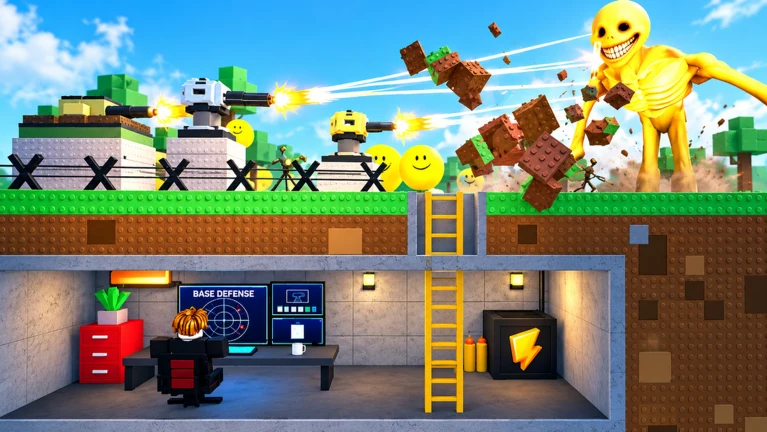
- Bunker vs Verity secret room design centers on protected interior spaces behind reinforced walls.
- Best use: Hide turrets and preserve a repair fallback instead of storing everything in open rooms.
- Key rule: Never block firing arcs — cover that hides your defense also blinds it.
- Team value: Hidden rooms give co-op squads a safe respawn-and-repair point during late waves.
- Check updates: Room mechanics can change — always verify in the official Roblox game page before a long run.
What Is a Secret Room in Bunker vs Verity?
A secret room in Bunker vs Verity is any enclosed, hard-to-reach interior space built inside your bunker layout. Verities attack from the outside and press toward entrances, so a sealed interior compartment acts as a protected core: a place to shelter defenses, stage repairs, and hold a fallback position when outer walls start failing.
Because Bunker vs Verity is a defensive survival experience — six players per server, escalating waves, coins earned between attacks — the value of a hidden room comes from what it protects, not from the room itself. A secret compartment that hides a turret but blocks its firing lane is worse than no room at all.
The game's official listing on Roblox is the best place to confirm current mechanics, since base-building rules and wall behaviors can shift between updates.
A secret room works when it adds a layer between the Verities and your core, not when it removes your defenses from the fight. Protection and coverage must coexist.
Secret Room Types and Comparison
There are four practical hidden-space archetypes that fit Bunker vs Verity bunker layouts. Each serves a different stage of a run.
| Room Type | Best For | Key Feature | Main Weakness |
|---|---|---|---|
| Core Shelter | Late-wave survival | Sealed interior behind main defense line | Useless if outer walls fall early |
| Turret Pocket | Protected defense | Openings toward approach lane, walls elsewhere | Blind spots if cover is overused |
| Repair Station | Co-op teams | Safe route for builders during attacks | Costs coins better spent on upgrades early |
| Resource Vault | Long runs | Guards coins/reserve between waves | Adds footprint that must be defended |
Core Shelter
- Sealed fallback behind the first defense layer
- Houses the team during breach events
- Reinforce walls most exposed to repeated hits
Turret Pocket
- Defenses placed behind strong wall sections
- Preserves clear openings toward the approach
- Avoids blocking firing arcs or repair access
Repair Station
- Interior route for builders to move safely
- Supports the builder-gunner role split
- Best added in the middle-game phase
Resource Vault
- Protects your coin reserve conceptually by reducing rebuild costs
- Reduces panic spending during high-pressure waves
- Pairs with a designated resource coordinator
Overusing cover creates blind spots and cuts effective turret range. If a defense cannot see the active approach lane, the secret room is hurting your survival odds.
Step-by-Step: Building a Hidden-Defense Layout
Follow this sequence to add a functional secret room to an existing bunker without weakening your outer line.
Establish the Outer Defense First
Build the main walls and entrance, and place an initial turret covering the primary approach. A secret room added before a working outer defense is an unfinished section Verities can exploit during early attacks.
Define the Inner Compartment
Mark a compact interior space behind your strongest wall section. Keep it small — larger footprints cost more coins and leave more surface area to defend.
Carve Firing Openings
Leave narrow, deliberate openings from the compartment toward the most likely attack lane. Openings should be wide enough for a clear line of fire, narrow enough that enemies cannot pour through.
Place Protected Defenses
Put your highest-value turret inside the pocket so its sides and rear are covered by structure. Confirm the firing arc still covers the approach before spending on upgrades.
Add the Safe Movement Route
Connect the compartment to your repair path so builders can reinforce walls without crossing the open approach. This is what turns a hidden space into a true fallback position.
Test Between Waves
Use the preparation window between waves to inspect blocked turrets, exposed entrances, and missing wall sections. Fix firing angles before the next attack begins.
If you can stand in your secret room, see the main approach through the openings, and reach any damaged wall without leaving cover, the layout is working.
Phase-by-Phase Secret Room Priorities
Secret room investment should scale with wave pressure. Spending everything on an elaborate interior during the opening phase leaves you exposed.
| Phase | Room Priority | Coin Rule | High-Pressure Action |
|---|---|---|---|
| Early waves | Skip or minimal — close exposed entrances first | Keep a reserve after first construction | Focus on enemies reaching the bunker, not expansion |
| Middle waves | Add turret pocket and repair route | Save for emergency repair plus one upgrade | One player maintains defense while another builds |
| Late waves | Reinforce compartment walls, upgrade pocket turret | Enter hard waves with a reserve, not zero | Repair immediately after damage spikes; focus dangerous targets |
| Between waves | Inspect openings and coverage gaps | Split coins between repairs and next upgrade | Assign responsibilities before the wave starts |
For three-player squads, the scout should call out threats early so the builder can reinforce the correct wall section — including the secret room's outer shell — before it fails.
Secret Room Readiness Checklist:
- Outer defense line is functional before interior work begins
- Turret pocket has clear firing openings toward the approach
- Safe interior route connects the room to repair positions
- Compartment walls reinforced before late waves
- Coverage gaps inspected during every preparation window
FAQ
Q: What is a secret room used for in Bunker vs Verity?
A secret room is a protected interior compartment that shelters high-value defenses, provides a repair fallback, and gives the team a safe staging point when outer walls are under attack. Its value depends on preserving clear firing lanes toward the approach.
Q: Should I build a secret room at the start of a match?
No. During early waves, close exposed entrances and establish a working outer defense first. A hidden interior added too early costs coins you need for initial turrets and leaves unfinished sections vulnerable to the first Verity attacks.
Q: Can a secret room block my own turrets?
Yes, and this is the most common failure. Cover that hides a defense can also blind it. Always leave deliberate openings toward the active attack lane and verify firing arcs between waves before upgrading.
Q: How do secret rooms work in co-op play?
In co-op, the compartment doubles as a repair station: the builder uses the safe interior route to reinforce walls while gunners hold firing positions. Assign one player to track structural needs so hidden sections are not forgotten.